One engine. Every signal.
TraceLoom reads the data your factory already produces: bills, ERP exports, meter feeds, payroll, audit packets. WEFT, the engine underneath, turns it into a live operating picture your team runs on and a verified record your buyers trust. One source. No double entry. No reconciliation theatre.
Your floor's numbers,
not an industry average.
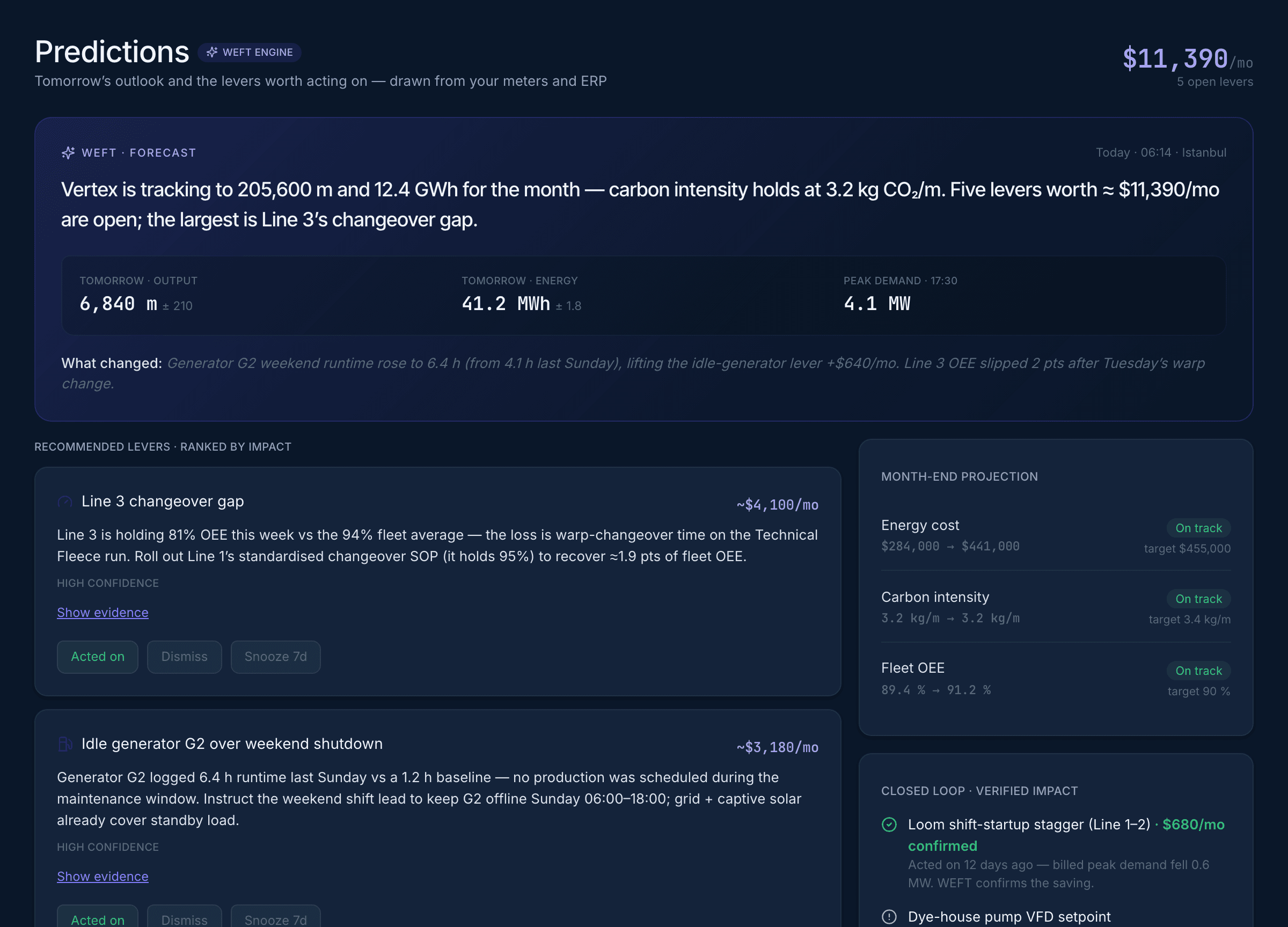
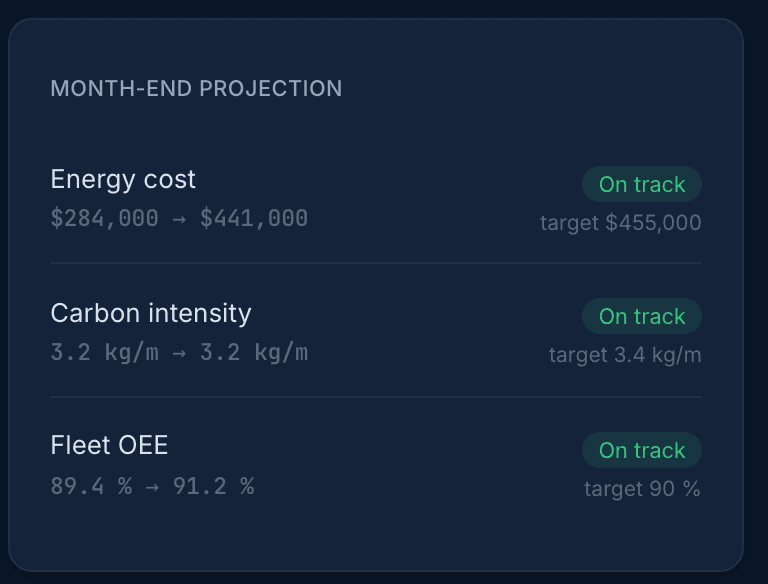
WEFT is the forecast layer. It reads your last 12 months of meter and ERP data and projects energy and output for the coming month. When history is short, the forecast widens its confidence rather than pretending to certainty.

One source layer.
Four artefacts your buyer asks for.
Each pillar is a different computation over the same input data. No pillar reads its own inputs; they all read from the engine. Nothing here is hand-entered, and nothing here is reconciled twice.
We read the systems
your floor already runs.
Twenty-four connectors live today; we'll write a new one in a week if you need it. Read-only by default, TraceLoom never writes back to your ERP unless you ask.
- DESCO
- BPDB
- WASA
- Titas Gas
- Oracle ERP / APEX
- SAP S/4
- Microsoft Dynamics
- Tally
- Custom CSV
- Schneider PowerLogic
- Siemens SENTRON
- Modbus TCP
- BACnet
- Biometric attendance
- Payroll exports
- SLCP packets
- WCA reports
- GHG Protocol
- ISO 14064-3
- CSRD · ESRS
- ESPR · DPP
- OEKO-TEX
- GOTS
Four pillars. One source of truth.
Most supply chain tools store your data. This one reasons about it. WEFT reads every source, allocates it, flags what drifted, and tells you the move worth making this week. No double entry. No spreadsheet that quietly disagrees with the dashboard. The reconciliation step that used to take a quarter is the engine itself now.
READ-ONLY · WRITES NEVER
ONE INPUT LAYER · FOUR ARTEFACTS
See the engine
on a real mill.
We'll walk you through Argon Denims' live numbers and what next month's energy forecast looks like for a real mill.